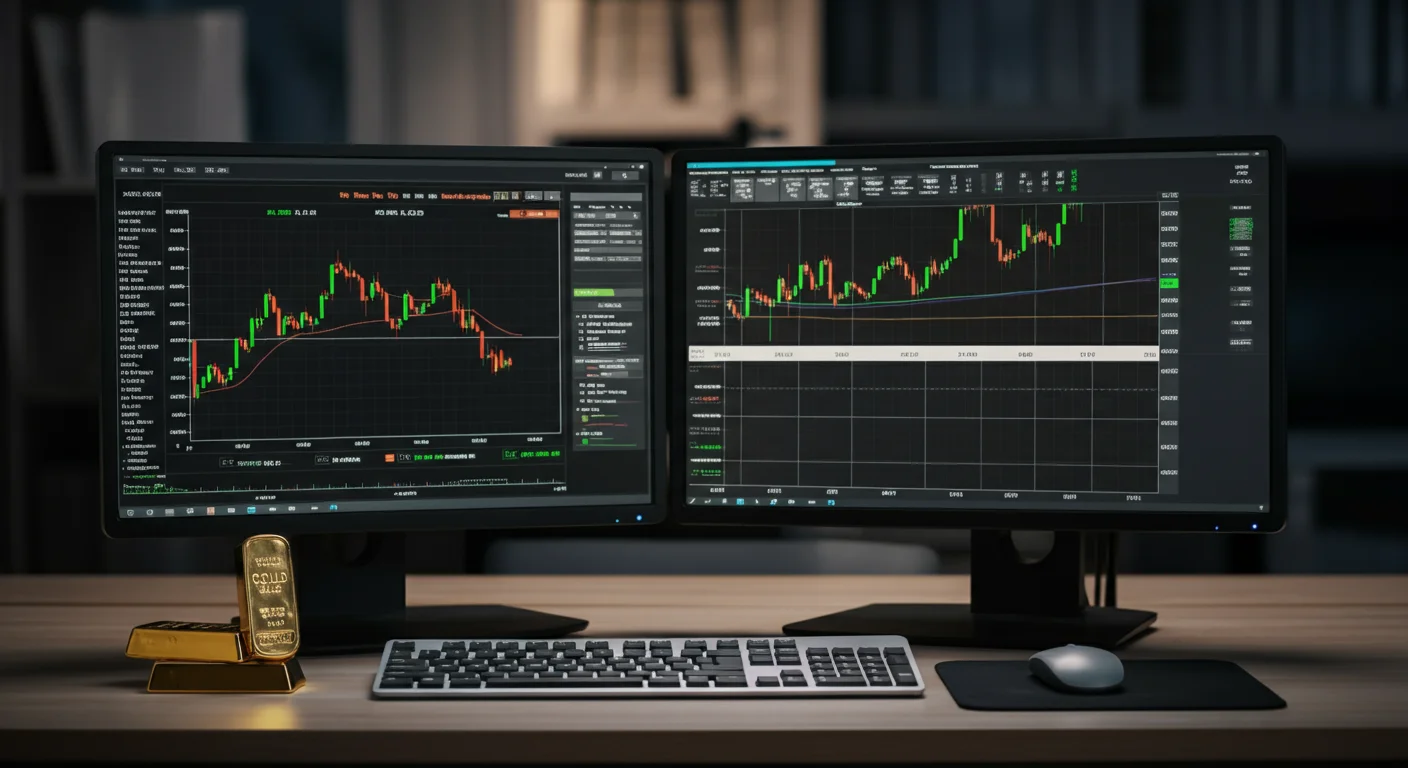
EURUSD order block entry for short trade
The definitive macro environment on March 11, 2026, points to a NEUTRAL bias for risk assets, driven by conflicting data. For a EURUSD short trade, this requires targeting a specific H4 bearish order block. The setup is validated by a strong Dollar Index at 98.80, which provides the primary headwind for the pair.
The Institutional Mechanics Behind a EURUSD Order Block
Identifying a high-probability EURUSD order block entry is not a function of lagging technical indicators; it is an exercise in decoding institutional intent. The current market structure presents a classic scenario where smart money positioning, central bank policy, and liquidity dynamics converge to create a specific window of opportunity for short-sellers.
The foundation of this trade thesis rests on the strength of the U.S. Dollar. The Dollar Index (DXY) is currently trading at a firm 98.80. This strength is underpinned by a U.S. 10-Year Treasury yield of 4.14%, a level that makes holding dollar-denominated assets more attractive than their European counterparts. This yield differential acts as a persistent gravitational pull on the EURUSD pair, creating a fundamentally bearish environment.
From a central bank perspective, the Federal Reserve's stated policy is a "data-dependent pause" with the Fed Funds Rate held at 3.00%. While a "pause" might sound dovish, the "data-dependent" qualifier is critical. It implies that any robust economic data could swiftly reignite hawkish sentiment, further bolstering the dollar. This ambiguity keeps markets on edge and favors strategies that capitalize on dollar strength during periods of risk-off sentiment.
Institutional order flow analysis reveals that large market participants have left significant sell-side liquidity resting within bearish order blocks on the H4 and daily charts. These are zones where large sell orders were previously absorbed, leading to a sharp downward move. Price is naturally drawn to these areas to fill remaining orders and sweep buy-side liquidity (retail stop-losses) resting just above recent highs. The ForexFundAI platform's Commitment of Traders (COT) visual dashboard indicates a smart money divergence, where speculative non-commercials may be slightly long or flat, while commercial hedgers are positioned for potential downside, anticipating a return to fair value. This divergence often precedes a significant price re-pricing, making a retracement into a bearish order block a prime entry point for a short trade aligned with the dominant macro flow.
March 11, 2026 Macro Snapshot: Key Data Points
| Indicator | Current Reading | Institutional Signal | Impact on EUR/USD & XAU/USD |
|---|---|---|---|
| DXY (Dollar Index) | 98.80 | Bullish (USD) | A reading this firm acts as a direct headwind for both EUR/USD (bearish) and XAU/USD (bearish), as a stronger dollar makes them more expensive for foreign buyers. |
| 10-Year UST Yield | 4.14% | Bullish (USD) | Higher yields increase the opportunity cost of holding non-yielding Gold (XAU/USD), creating bearish pressure. It also strengthens the USD, weighing on EUR/USD. |
| Fed/CB Stance | Federal Reserve in a data-dependent pause, having held the Fed Funds Rate at 3.00%. | Neutral-to-Hawkish | The "pause" is neutral, but the data-dependency injects hawkish potential, supporting the USD's underlying strength and capping EUR/USD rallies. |
| Geopolitical Risk | Conflict between strong underlying fundamental support and potent near-term headwinds. | Elevated | Provides a floor for safe-haven assets like Gold (bullish for XAU/USD) but has a mixed impact on EUR/USD, often weakening the EUR relative to the USD. |
| COT Net Positioning | Smart money divergence observed; non-commercials not heavily committed, commercials leaning net short. | Cautiously Bearish | Indicates that institutional hedgers are preparing for a potential move lower, while speculators lack conviction for a sustained rally in EUR/USD or XAU/USD. |
| XAU/USD Spot | 2026.00 | AI Bias: NEUTRAL | The spot price is caught between geopolitical support and headwinds from the DXY/yields, confirming the balanced, neutral stance of the AI Gatekeeper. |
5 Institutional Steps to Trade a EURUSD Order Block Entry For a Short Trade in March 2026
Executing this trade requires precision and adherence to a rules-based institutional process. The goal is to avoid being swept up in market noise and to enter based on confirmed smart money activity.
- ▸
Identify the Higher Timeframe (HTF) Bearish Order Block: Scan the H4 and Daily charts for the most recent, clear bearish order block that initiated a significant break of structure to the downside. This is typically the last up-candle before a strong sell-off. This zone represents a pool of unfilled institutional sell orders. Given the current macro context, a key area of interest would be a block formed during a previous rejection of a key resistance level.
- ▸
Wait for Price to Mitigate the Order Block: Patience is paramount. Do not chase the price lower. Allow the market to engineer liquidity by trading back up into the identified H4 order block. The optimal entry zone is often the 50% level (mean threshold) of the order block's body. This retracement serves to sweep buy-side liquidity resting above recent swing highs.
- ▸
Seek Lower Timeframe (LTF) Confirmation: Once price enters the H4 order block, switch to a lower timeframe (e.g., M15 or M5). Look for a clear shift in market structure from bullish to bearish. This could be a break of a recent LTF low, creating a lower low, followed by a failure to make a higher high. This confirmation signals that sellers are taking control within the institutional zone of interest.
- ▸
Define Entry and Stop Loss with Precision: The entry should be placed upon the LTF confirmation. The stop loss must be placed logically above the high of the H4 order block. Placing it just above the high ensures the position is protected from a full liquidity sweep of the zone. A tight stop-loss placed inside the block is a common retail error and is likely to be triggered before the real move begins.
- ▸
Set Take Profit at Downstream Liquidity Pools: The take profit targets should be set at clear areas of downside liquidity. These include old lows or, more precisely, unfilled Fair Value Gaps (FVGs) on the H4 or Daily chart. An FVG represents a price inefficiency that the market is likely to revisit. Targeting these zones aligns the exit strategy with the probable path of institutional order flow, rather than arbitrary risk/reward ratios.
The Retail Trap: Common Mistakes in This Setup
The current macro environment, characterized by a NEUTRAL XAU/USD bias and underlying USD strength, creates several traps for undisciplined traders. Understanding these pitfalls is crucial for capital preservation.
First is the mistake of trading against the dominant macro driver. While EUR/USD might show minor bullish candles on an intraday chart, the DXY at 98.80 and 10-year yields at 4.14% represent a powerful bearish force. Retail traders who ignore this and attempt to buy EUR/USD are fighting a losing battle against institutional capital flows. They are buying into a liquidity-engineering rally, not the start of a new uptrend.
Second is the error of improper stop loss placement. A common retail tendency is to place a stop loss just a few pips above a recent high. In this environment, smart money is actively hunting this buy-side liquidity. The price will often deliberately push just beyond these levels to trigger stops before reversing. The correct placement, as outlined above, is structurally sound—above the entire order block that is orchestrating the move.
Third, traders often misinterpret the Commitment of Traders (COT) data or ignore it entirely. A surface-level reading might show that speculators (non-commercials) are not heavily short, leading to confusion. However, the institutional insight comes from the divergence between commercials and non-commercials. The ForexFundAI COT dashboard visualizes this clearly, showing that the hedgers—the smart money—are positioned for downside, providing the conviction that a short entry at an order block is the high-probability trade.
ForexFundAI: Institutional Intelligence, Retail Access
Navigating a complex macro environment like the one on March 11, 2026, requires more than basic technical analysis. It demands a multi-layered, institutional-grade approach. The ForexFundAI platform is engineered to provide exactly this, translating complex data into actionable intelligence through its 3-layer validation system.
Layer 1: Macro Fundamental AI: The system's core AI processes the conflicting macro inputs in real-time. It analyzes the Federal Reserve's data-dependent pause, the implications of a 4.14% 10-year yield, and the firm DXY at 98.80. It correctly interprets these as a net headwind for XAU/USD and EUR/USD, despite geopolitical undercurrents, generating the definitive NEUTRAL bias and framing the bearish thesis for EUR/USD.
Layer 2: Institutional Order Flow Mapping: The platform's algorithms automatically scan charts for high-probability institutional footprints. For the current EUR/USD setup, the system would highlight the precise H4 bearish order block and any downstream Fair Value Gaps (FVGs). This removes the guesswork and subjectivity from identifying these critical zones, allowing traders to see the market through an institutional lens.
Layer 3: COT Confirmation: The platform's visual COT dashboard provides the final layer of confirmation. Instead of forcing traders to sift through raw CFTC reports, it presents a clear visualization of net positioning. In today's scenario, it would display the smart money divergence between commercials and non-commercials, validating the decision to favor short setups from areas of supply.
When these three layers align, the platform issues a real-time signal—complete with Entry, Stop Loss, and Take Profit levels—via Telegram and the MT5 Expert Advisor, ForexFund_AutoTrader.mq5. This systematic process, with its 90%+ AI confidence gate, ensures traders are only engaging in setups backed by a confluence of macro, order flow, and positioning data. Traders can view a history of these high-conviction setups on our live Gold signals dashboard.
Join 2,000+ professional traders relying on ForexFundAI for institutional-grade macro intelligence — explore plans from $30/mo.
Risk Disclaimer: Forex and commodities trading carries substantial risk of capital loss. Past signal performance does not guarantee future results. Signals are not financial advice. Only allocate capital you can afford to lose in full. Full risk disclosure.